Do You Really Need 20% Down?

Would you believe someone just bought a million-dollar home with about thirty thousand dollars down?
Most people wouldn’t. Because most people are still doing the math on a number they picked up somewhere along the way and never questioned.
If you think you need 20% down to buy a home in California, that belief may be the only thing standing between you and a house.
Where the 20% rule even came from
Twenty percent isn’t a law. It isn’t a requirement. It’s the threshold where you avoid mortgage insurance, and somewhere along the way that turned into folklore about what it takes to buy a house at all.
Your parents may have put 20% down. Your coworker may have. That doesn’t make it the entry fee.
What that rule actually costs you in California
Run it on a million-dollar home, which in a lot of Southern California is an ordinary house on an ordinary street.
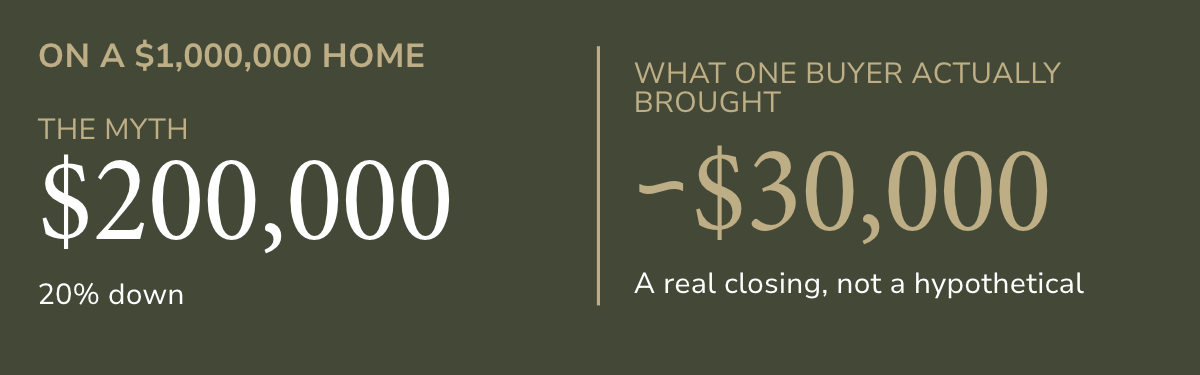
That gap isn’t a rounding error. For most families it’s the difference between buying this year and buying in a decade.
____________________________________________________________________________________________________________________________________
People don’t get disqualified. They disqualify themselves.
So what do you actually need?
The honest answer is that it depends on you, and that’s not me dodging the question. Different programs ask for very different amounts down, and the one that fits you depends on your income, your credit, the property, and whether you’ve owned before.
What I can tell you is that the number is almost always far less than 20%. And in some situations it is dramatically less than people expect.
The part nobody adds up: the cost of waiting
Saving toward 20% feels responsible. But while you’re saving, prices move, rents go up, and the target moves with them. You save for years and arrive at a bigger number than the one you started chasing.
Meanwhile someone who bought with less down has been building equity the whole time. Not because they were smarter. Because nobody told them to wait.
The honest caveat
Putting less down means a bigger loan and usually mortgage insurance, and that’s a real monthly cost you should see clearly before you decide. Sometimes waiting genuinely is the right call.
But that should be a decision you make with real numbers in front of you. Not one you make because of a rule nobody ever checked.