The relationship between the Federal Reserve’s rate cuts and 30-year fixed mortgage rates
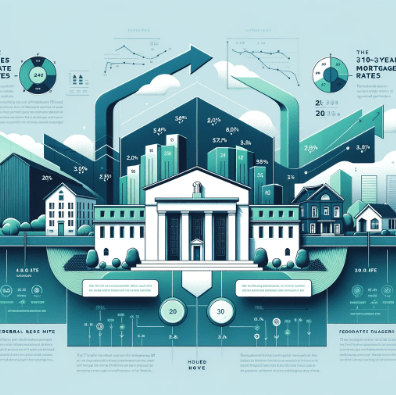
Federal Reserve Rate Cuts: The Federal Reserve, often referred to as the Fed, is the central bank of the United States. One of its primary tools to influence the economy is the manipulation of interest rates. When the Fed believes the economy needs a boost, it may decide to cut its key interest rate, known as the federal funds rate. Lowering this rate encourages banks to borrow money at cheaper rates, which ideally leads to them lending more money to consumers and businesses.
Impact on 30-Year Fixed Mortgage Rates: The relationship between Fed rate cuts and 30-year fixed mortgage rates is not as direct as you might think. Fed rate cuts do not immediately lead to lower 30-year fixed mortgage rates for consumers. Here’s why:
- Indirect Influence: While the Fed’s actions can influence the overall interest rate environment, mortgage rates are influenced by various factors, including the demand for loans, inflation expectations, and the yields on long-term government bonds (like the 10-year Treasury yield). Mortgage rates are more closely tied to long-term rates, not the short-term rates that the Fed controls.
- Complex Market Dynamics: Mortgage rates are determined by the broader financial market, where lenders compete to attract borrowers. Lenders consider factors like the cost of funds, their profit margins, and market competition when setting mortgage rates. Fed rate cuts may lower the cost of funds for banks, but other factors influence their lending decisions.
- Expectations and Risk: Mortgage rates are influenced by investors’ expectations about future economic conditions and inflation. If investors anticipate that the Fed’s rate cuts will stimulate economic growth and potentially lead to higher inflation, they might demand higher mortgage rates to compensate for the increased risk.
- Long-Term Bonds: Mortgage rates often move in tandem with the yields on long-term government bonds. If investors seek the safety of bonds during uncertain times, it can push bond prices up and yields down, which, in turn, can lead to lower mortgage rates.
In summary, while Fed rate cuts can have an impact on the broader interest rate environment, they don’t directly dictate 30-year fixed mortgage rates. Mortgage rates are influenced by a complex interplay of market forces, investor sentiment, and economic expectations. So, when the Fed cuts rates, it’s a piece of the puzzle, but not the sole determinant of mortgage rates.
Have more questions about rates, mortgage or real estate finance in general? Contact Chenine Lozano 562-762-7511.